A credible quote depends on more than the vessel and valve: resin volume, hardness, flow rate, regeneration method, installation work and ongoing salt use all affect the final figure. By the end, you will know how to test your water, compare domestic and commercial capacities, check whether a quoted system is correctly sized, and verify that installation and local service are genuinely available.
Key takeaways
- Demand resin, valve, plumbing, transport and commissioning in the quote.
- Test hardness, iron, TDS and flow before sizing the softener.
- Choose ion exchange, conditioning, dosing or RO for the actual water problem.
- Confirm regeneration, salt supply, warranty and local service in writing.
What does a water softener cost in Nagpur, and what should the quote include?
A water softener price in Nagpur is meaningful only as a delivered, installed and commissioned cost. A low equipment figure may hide a smaller resin bed, manual multiport valve, excluded resin, or separate plumbing and transport charges.
For anyone planning to buy water softener in Nagpur, compare the five-year operating cost, not just the invoice total.
| Quote type | Why the prices look similar | What to verify |
|---|---|---|
| Low equipment quote | Smaller vessel or manual valve | Resin volume, vessel size, valve type and rated flow |
| Automatic household quote | Controls included, capacity may differ | Regeneration setting, salt per cycle and interval |
| Commercial quote | One vessel may stop during regeneration | Peak flow, pressure drop and duplex requirement |
Require these figures in writing:
- Equipment, resin, control valve, brine tank, installation, transport, taxes and commissioning as separate line items.
- Salt consumption per regeneration, expected regeneration interval and annual salt requirement.
- Annual servicing, replacement resin, replacement valve, spare-part availability in Nagpur and breakdown response time.
- Warranty period and exclusions, including resin fouling, electrical damage and untreated-water quality.
- A raw-water report covering hardness as mg/L CaCO₃, pH, TDS or conductivity, iron, manganese and turbidity; add chloride and sulphate for borewell water.
- Drain and overflow arrangements for chloride-containing regeneration discharge. Do not connect it blindly to a septic tank, garden, or storm-water line.
- Handover records showing pre- and post-softener hardness, inlet and outlet pressure, programmed regeneration, bypass position and salt-filling instructions.
How do you test Nagpur water and calculate the required softener capacity?
Test the actual inlet water before choosing resin or vessel size. Identify whether the source is municipal supply or borewell, collect a representative sample, and obtain a report showing:
- Total hardness in mg/L as CaCO₃
- pH, TDS or conductivity
- Iron, manganese and turbidity
- Chloride and sulphate for borewell water
Hardness load is calculated as daily water volume × hardness ÷ 1,000,000. Therefore, 1,000 litres at 300 mg/L as CaCO₃ contains 0.3 kg of hardness. Divide the hardness load between regenerations by the resin manufacturer’s usable capacity at the selected salt dose, then add a practical safety margin.
Do not use the resin’s advertised maximum capacity without checking the operating salt setting.
Resin volume and equipment flow rate solve different problems. Size the resin bed from hardness load and regeneration frequency; size the vessel and control valve from peak simultaneous flow, continuous flow, inlet pressure, allowable pressure drop and operating hours.
A domestic unit must handle the shower, taps and appliances running together, not just the occupants’ daily consumption.
For a commercial water softener in Nagpur, record the required service availability. A single vessel supplies no softened water during regeneration, while a duplex or alternating system keeps supply available. Set automatic regeneration from measured water volume and verified hardness; a time-only setting can waste salt at low occupancy or allow hard-water breakthrough.
Obtain the resin volume, valve flow rating and regeneration setting in writing.
Which treatment system fits the water: ion exchange, salt-free conditioning, dosing or RO?
Choose ion exchange for scale-forming calcium and magnesium; choose salt-free conditioning when you want to reduce scale deposits without removing hardness. Dosing and RO solve different problems.
| Option | What it changes | When it applies |
|---|---|---|
| Ion exchange softener | Replaces calcium and magnesium with sodium; leaves most TDS, chloride, microbes and dissolved contaminants behind | Boilers, heaters, laundry and hard-water fixtures |
| Salt-free conditioning | Alters how minerals crystallise on surfaces; does not remove hardness or lower TDS | Scale control where salt discharge or sodium addition is unacceptable |
| Dosing | Adds a measured chemical, such as polyphosphate, to control scale or corrosion; does not disinfect or soften water | Closed systems or equipment needing chemical protection |
| RO | Removes much of the dissolved salt load, including hardness, through a membrane; creates reject water | Drinking-water treatment or high-TDS water, with suitable pretreatment |
A softener is not a purifier. Iron, manganese, suspended solids and chlorine can foul or damage resin, so a sediment filter, iron treatment or activated carbon stage may belong before it.
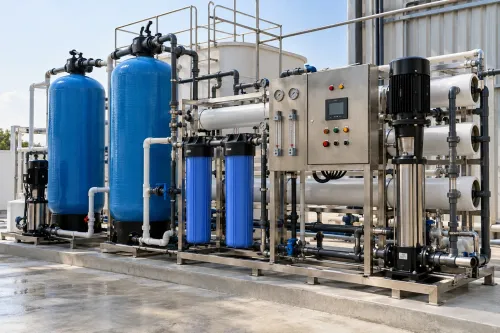
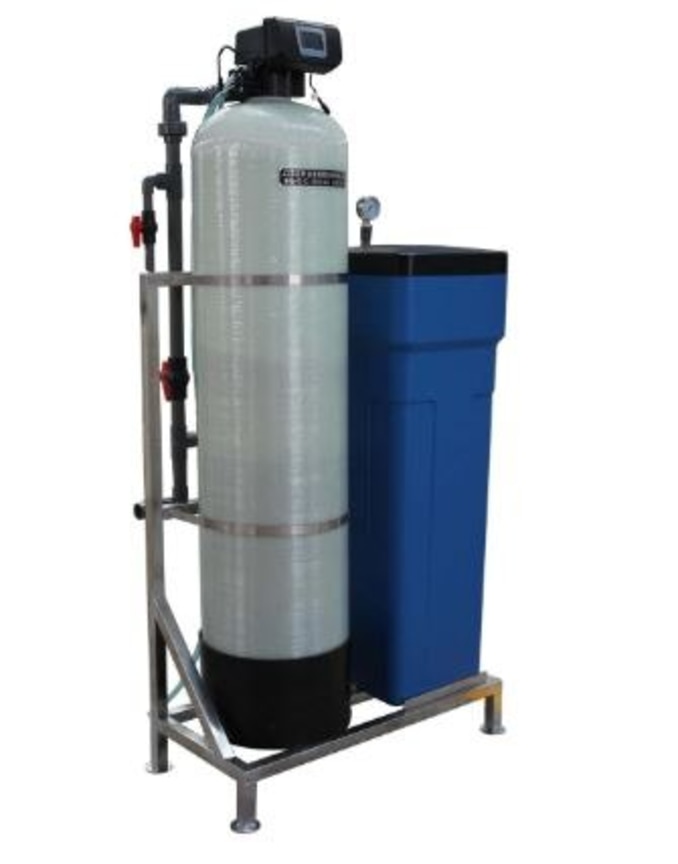
The resin vessel, brine tank and control valve operate as one system:
- Service: water passes through resin beads, which exchange hardness ions for sodium.
- Regeneration: the valve draws brine from the salt tank through the resin to restore exchange capacity.
- Rinse and refill: the valve flushes brine and hardness to the drain, then prepares the tank for the next cycle.
A meter-triggered cycle matches regeneration to actual use. A time-only setting can waste salt during low occupancy or permit hard-water breakthrough if capacity is miscalculated.
What does water-softener installation in Nagpur require, and is local service really available?
Installation requires a firm, level base, accessible inlet and outlet connections, a bypass, space for the brine tank, a suitable drain, and a controller power point. Leave enough clearance to remove the valve and refill salt; a cramped installation makes routine servicing expensive.
- Identify the source and test water at the actual inlet. Municipal supply still requires hardness, pH, TDS or conductivity, iron, manganese and turbidity results. Borewell sites also need chloride and sulphate checks because seasonal chemistry, storage tanks and old piping can change pretreatment needs.
- Confirm peak and continuous flow, inlet pressure, pipe size, allowable pressure drop and operating hours. A single vessel stops softened water during regeneration; specify duplex or alternating vessels when that interruption is unacceptable.
- Provide a drain with an air gap and confirm its disposal route before work begins. Never send chloride-containing regeneration brine to a septic tank, garden, storm-water line or unsuitable drain.
- Match the controller’s electrical rating to an accessible, grounded supply and protect it from splashing. Ask who will provide isolation and testing.
- Ask a water-softener dealer in Nagpur for the specified resin volume, vessel size, valve model, salt-tank capacity, operating flow, regeneration setting and spare-parts source. Obtain a dated site-visit commitment and written scope covering delivery, piping, programming, leak testing and commissioning.
A listing proves sales presence, not local service. Ask Venkatesh Hydro Technologies, or any competing supplier, to record the raw-water report, installed settings and handover readings before you accept the system.
Related product
 | Water Softeners A water softener is a specialized system designed to remove hardness-causing minerals, primarily calcium and magnesium, from your water supply. View product → |
How do you compare the long-term cost and handover quality before buying?
Compare the delivered-and-commissioned cost over five years, not the equipment price. For a buy water softener in nagpur decision, calculate salt as kilograms per regeneration × regenerations per year × salt price per kilogram. Add regeneration water, annual service, electricity, resin replacement and control-valve replacement.
| Cost item | Calculation | Written evidence to request |
|---|---|---|
| Salt | kg per regeneration × annual cycles × price/kg | Salt setting and regeneration interval |
| Water | litres per regeneration × annual cycles × water cost | Drain-flow or regeneration-water figure |
| Maintenance | Annual service fee + consumables | Service schedule and fee |
| Replacement | Resin, distributor and valve cost divided by expected service life | Part numbers, prices and availability in Nagpur |
For a commercial water softener in nagpur, also price the cost of unavailable softened water. A single vessel stops supplying treated water during regeneration; an alternating duplex system costs more but keeps service available.
Before acceptance, obtain these records in writing:
- Commissioning sheet showing inlet and outlet hardness in mg/L as CaCO₃, operating flow, inlet pressure, pressure drop, leaks and drain operation.
- Controller settings showing meter or time trigger, capacity setting, salt dose and regeneration time.
- Signed installation drawings, valve manual, resin details, electrical information and operator training record.
- Warranty period, start date, exclusions for fouling or poor pretreatment, labour coverage and who pays transport.
- Service commitment stating Nagpur response time, preventive-visit frequency, stocked replacement parts and escalation contact.
Do not treat a listing as availability until the supplier gives a site-visit date and a written commissioning scope.
Frequently asked questions
What should a water softener quote in Nagpur include?
Request a delivered and installed price that names the resin volume, control valve, mineral tank, brine tank, salt, bypass valve, plumbing, transport, commissioning and taxes. Confirm whether electrical work, drain piping and civil work are excluded.
How do you calculate water softener capacity for Nagpur water?
Test hardness in mg/L as CaCO3, measure daily water use and allow for the regeneration interval. Capacity depends on hardness, peak flow, resin volume and salt setting, so do not size the unit from household population alone.
Which water-treatment system should you choose?
Use ion exchange when you need actual hardness reduction. Salt-free conditioners do not remove hardness; dosing controls scale under defined conditions. Choose RO when dissolved salts and contaminants require membrane treatment, not simply because water feels hard.
What does water-softener installation in Nagpur require?
Provide a level, ventilated location with inlet water, a drain connection, overflow routing, a power point for an automatic valve and space to refill salt. The installer should test leaks, set regeneration, measure outlet hardness and explain operation.
How can you compare long-term softener costs and handover quality?
Compare salt consumption, water used for regeneration, resin replacement, electricity, servicing and downtime alongside the purchase price. Ask for commissioning readings, a maintenance schedule, warranty terms, spare-part availability and a written operating handover.
Keywords