Boiler makeup water carries more than hardness: silt, rust, suspended solids and borewell particles can foul softeners, cartridge filters and RO membranes before water reaches the feedwater system. You will be able to identify the right pretreatment train, calculate the filter and backwash duty, specify installation controls, and evaluate an installer’s performance guarantee.
Key takeaways
- Test Nagpur source water before selecting filter media or treatment stages.
- Size the vessel for peak flow, solids loading and available backwash capacity.
- Check vessel internals, valves, pressure gauges and media depth before commissioning.
- Compare installers using turbidity, pressure drop and boiler-treatment performance records.
What a pressure sand filter does before boiler feedwater treatment
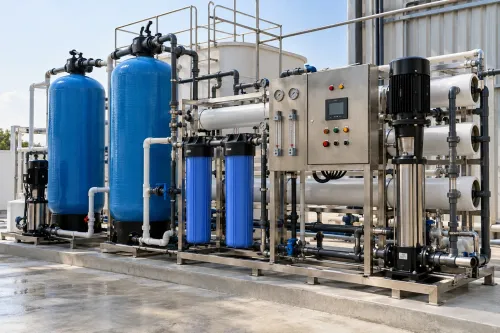
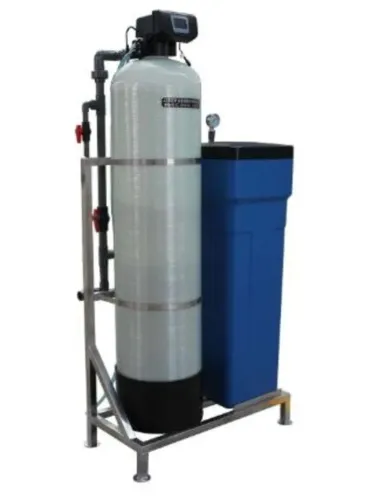
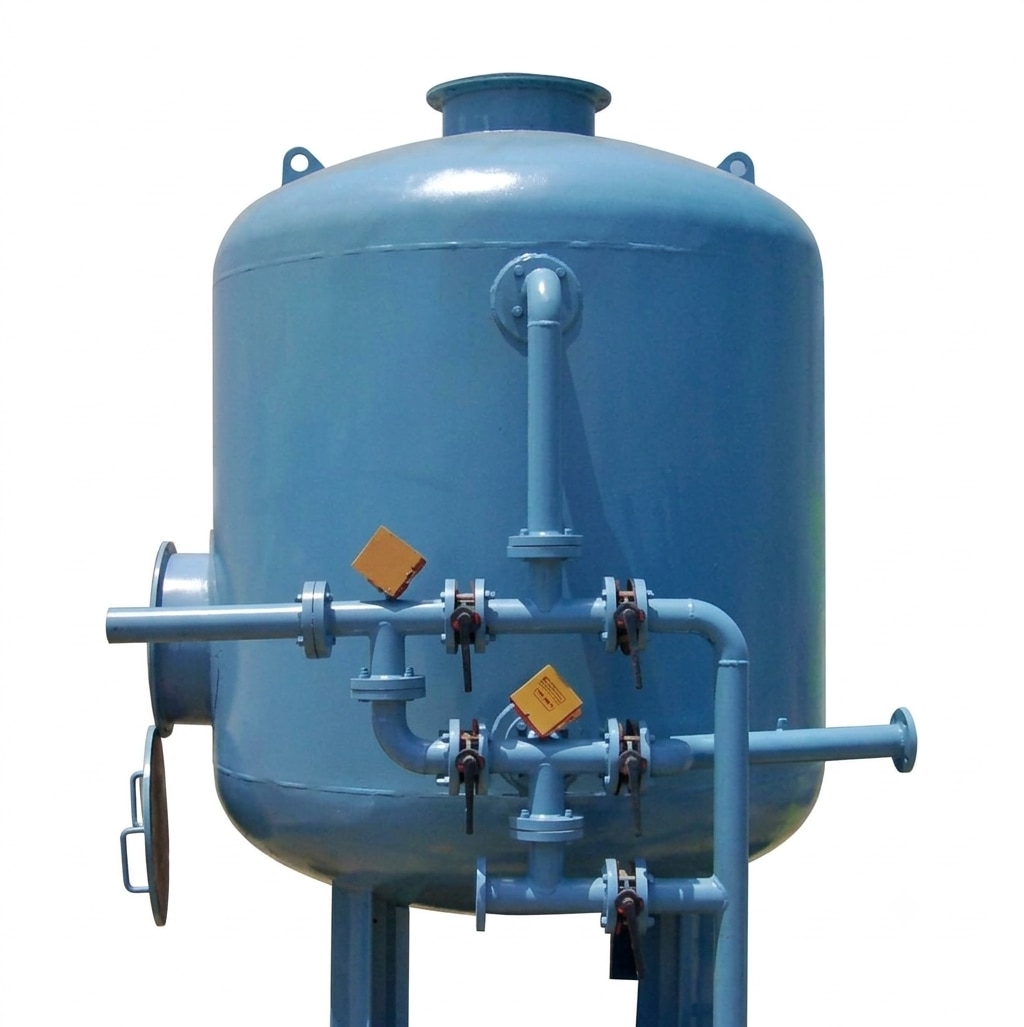
A pressure sand filter removes suspended solids before water reaches the softener, RO plant, deaerator, feedwater tank or boiler. Its targets include turbidity, silt, rust particles and other particulate matter that would foul valves, resin beds, membranes and heat-transfer surfaces.
For boiler water filtration in nagpur, treat the filter as pretreatment, not boiler protection. It does not remove dissolved hardness, alkalinity, chloride, silica, total dissolved solids or dissolved oxygen. Low outlet turbidity proves only that particulate removal is working; it says nothing about scale-forming salts or corrosion chemistry.
| Stage | Main duty | What differs from a pressure sand filter |
|---|---|---|
| Pressure sand filter | Removes suspended solids and turbidity | Depth filtration through granular media |
| Multimedia filter | Handles a wider solids load with layered media | Usually improves particle removal and run length |
| Cartridge filter | Polishes fine particles downstream | Uses disposable elements and has limited dirt capacity |
| Water softener | Removes calcium and magnesium hardness | Exchanges ions; it does not clarify dirty water |
| Iron-removal filter | Treats dissolved iron or manganese after suitable oxidation | Requires validated chemistry, pH and media |
| RO or demineraliser | Removes dissolved salts, silica and much of the TDS | Uses membranes or ion exchange, not sand |
| Chemical programme | Controls oxygen, phosphate, pH, sludge and corrosion | Protects the boiler after physical filtration |
A pressure sand filter for industrial boilers in nagpur must match measured raw-water quality and peak makeup flow. Confirm backwash pump, drain and storage capacity, and never use a pressure-rated vessel for hot condensate without checking its lining, valves, gaskets and piping.
Test Nagpur source water and choose the treatment sequence
A raw-water report must precede pressure sand filter selection; boiler horsepower cannot reveal the solids load or dissolved chemistry.
Collect a representative source sample during normal production and test turbidity, total suspended solids (TSS), pH, total hardness, alkalinity, iron, manganese, chloride, silica, conductivity, total dissolved solids (TDS), and microbiological quality for an open or poorly protected source.
| Test result | Treatment decision | Risk if skipped |
|---|---|---|
| High turbidity or TSS | Select media and filtration capacity for the measured solids load | Rapid pressure rise and short filter runs |
| Iron or manganese | Add validated oxidation plus catalytic media or dedicated removal | Fouled sand and stained boiler-train equipment |
| Hardness, alkalinity or high TDS | Add softening, RO or demineralisation after filtration | Scale, carryover and excessive blowdown |
| Microbiological growth | Add source control and a suitable disinfection step | Biofouling and unstable water quality |
Use this treatment order:
- Screen and protect the intake; disinfect when microbiological testing requires it.
- Oxidise iron or manganese before dedicated removal media when those results demand it.
- Install the pressure sand filter for suspended solids and turbidity.
- Follow it with softening, RO or demineralisation selected from hardness, silica and TDS.
- Apply boiler chemical treatment, deaeration and blowdown control to the boiler specification.
For boiler water filtration in Nagpur, confirm backwash water, pump flow, drain capacity and disposal before pressure sand filter installation for boiler businesses in Nagpur. A low-turbidity outlet does not prove hardness or corrosion control.
Size the vessel from flow, solids loading and backwash capacity
Required filter area equals peak service flow divided by the selected filtration rate: A = Qpeak ÷ R. Calculate Qpeak from maximum boiler make-up demand, blowdown recovery, condensate-return loss and other simultaneous users—not boiler horsepower alone. A vessel sized for average flow becomes a bottleneck during production changes.
- Establish Qpeak in m³/h from measured or calculated make-up flow, including the highest expected evaporation loss and blowdown.
- Select R in m³/m²·h from the specified media grading, bed depth, raw-water turbidity/TSS and outlet turbidity target. A higher rate lowers vessel cost but increases head loss and shortens the run.
- Check the vessel area against both Qpeak and the pump’s available flow. Record the clean-bed pressure drop and the maximum allowable differential pressure; stop or backwash at the manufacturer’s terminal limit, not after outlet quality has already failed.
- Estimate run time from allowable solids loading: run time = allowable captured solids ÷ (Qservice × influent solids concentration). Use measured TSS and revise the estimate after commissioning.
- Size backwash independently. Confirm the specified backwash flow in m³/h, pump head, water volume, storage, drain capacity and disposal route. Required storage equals backwash flow multiplied by backwash duration, plus rinse volume.
For pressure sand filter installation for boiler businesses in Nagpur, separate vessel pressure rating from normal operating pressure and check lining, valves, sight glass, gaskets and piping against water chemistry and temperature. A pressure sand filter for industrial boilers in Nagpur is unsuitable for hot service unless every wetted component is rated for it.
Specify the piping, media and commissioning checks
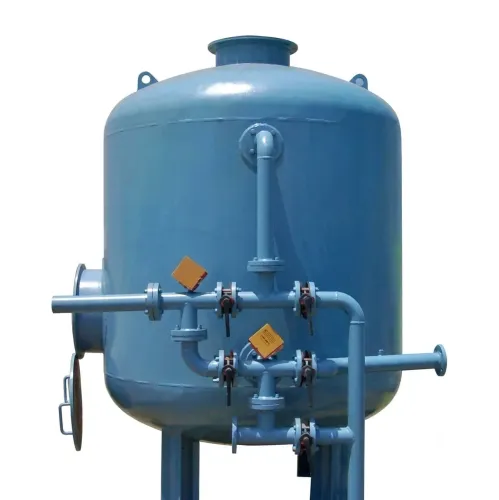
A correctly sized upper distributor must spread water across the entire bed; a damaged nozzle or undersized inlet creates high-velocity paths, channeling and untreated breakthrough. Use graded support gravel or an engineered underdrain matched to the nozzle slots, then provide enough freeboard for the specified media expansion during backwash.
Without that space, sand escapes into the outlet or contaminates downstream equipment.
Specify the media by type, effective size, uniformity coefficient and bed depth, not merely as “filter sand.” Confirm the vessel, lining, valves, sight glass, gaskets and piping suit the water chemistry and temperature. Pressure-vessel rating is not the same as suitability for hot condensate or feedwater service.
Check these installation points before accepting the filter:
- Install isolation, bypass, drain and sample valves so you can test raw and filtered water without interrupting every downstream stage.
- Match the backwash pump to the specified flow at the vessel’s actual pressure; verify backwash-water storage, drain capacity and the disposal route.
- Confirm valve sequencing prevents simultaneous service and backwash connections, which can carry media into the outlet.
- Record media quantity, bed depth, distributor condition, underdrain inspection and freeboard measurement.
- Run service, backwash and rinse cycles, then record inlet pressure, outlet pressure, differential pressure, flow and outlet turbidity.
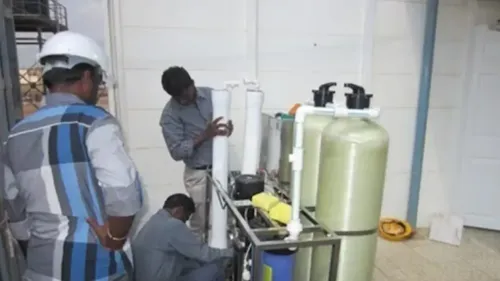
The commissioning report should state the acceptance limits and results. An industrial sand filter installer in Nagpur should also show that the filter supports boiler water filtration in Nagpur without restricting peak make-up flow or failing to reach its specified backwash rate.
Compare installer proposals by measurable boiler performance
A proposal is not comparable if it says only “industrial filter” or quotes vessel size. For pressure sand filter installation for boiler businesses in Nagpur, judge the offer against measured raw-water quality, peak makeup flow and the backwash resources available at your plant.
| Stage | Require in the document | Acceptance evidence |
|---|---|---|
| Quotation | Media type and grading, bed depth, design service flow, backwash flow, normal operating pressure, vessel pressure rating, maximum differential pressure and expected outlet turbidity | Calculations tied to turbidity/TSS, hardness, iron, manganese, silica, conductivity/TDS and peak boiler makeup demand |
| Acceptance test | Raw and filtered turbidity/TSS, service flow, inlet and outlet pressure, differential pressure, backwash flow, drain capacity and backwash duration | Signed readings at design flow, with no media carryover, valve leakage or untreated breakthrough |
| Operating handover | Pressure gauges, sampling points, backwash trigger, operating limits, log sheet, media replacement method and water-disposal route | Operator demonstrates service, isolation, rinse and backwash cycles |
Ask the industrial sand filter installer in Nagpur to separate vessel rating from normal operating pressure. Confirm that the lining, valves, sight glass, gaskets and piping suit feedwater temperature and chemistry; a pressure-rated vessel is not automatically suitable for hot condensate.
Backwash pump capacity, storage and drain sizing belong in the quotation. Venkatesh Hydro Technologies should be assessed on this evidence, not on a catalogue vessel. Low outlet turbidity does not prove hardness control, corrosion control or safe boiler cycles; specify the downstream softener and chemical-treatment responsibilities separately.
Related product
 | Sand Filters Usage/Application water purification Color Blue Vessel Diameter 200-400 mm Vessel Height 500-800 mm Bursting Pressure 10 KG Venkatesh is an company... View product → |
Frequently asked questions
What does a pressure sand filter remove before boiler feedwater treatment?
It removes suspended solids such as turbidity, silt, rust particles and other particulate matter before water reaches downstream treatment equipment.
How should Nagpur businesses choose a treatment sequence?
Test the source water first, then select the sequence around measured suspended solids and the requirements of the softener, RO plant, deaerator, feedwater tank or boiler.
What information is needed to size a pressure sand filter?
Use the required flow, solids loading and available backwash capacity to select the vessel and operating arrangement.
What should you check during pressure sand filter commissioning?
Verify the piping, media, valves, pressure gauges, backwash operation and treated-water performance before placing the filter into routine service.
How can you compare industrial sand filter installers in Nagpur?
Ask each installer to state measurable targets and record results such as turbidity, pressure drop, backwash performance and downstream boiler-treatment performance.
Keywords