Choose the filter from the water, duty cycle, flow and downstream treatment—not from vessel diameter alone. By the end, you will be able to calculate a defensible capacity, compare media and backwash requirements, and prepare a supplier brief for a pool, borewell system or industrial plant.
Key takeaways
- Define the water source and treatment duty before selecting vessel diameter.
- Calculate filter capacity from flow rate and design filtration rate.
- Size the vessel, media bed and backwash system as separate decisions.
- Compare suppliers on guarantees, installation quality and local service access.
Start with the water source and the treatment duty
Begin with the water source and treatment duty, not the vessel diameter. Pressure sand filter selection in Nagpur starts by deciding whether the unit handles pool recirculation, raw borewell or municipal water, or industrial pretreatment.
1. Identify the source and test it recently. Record turbidity, suspended solids, pH, TDS or conductivity, hardness, alkalinity, iron, manganese, and microbiological results. Borewell water and treated municipal water can require different media and cleaning intervals.
2. Define the treated-water target. A pool filter normally supports continuous recirculation and turbidity control. An industrial pressure sand filter may clarify water before activated carbon, softening, reverse osmosis, or disinfection.
3. Separate suspended contamination from dissolved contamination. Sand can remove particulate matter and reduce turbidity; it is not a softener, desalination unit, or dependable treatment for dissolved TDS, hardness, nitrate, or fluoride. Assign those duties to a specified downstream process.
4. Describe the operating pattern. Record normal flow, peak flow, operating hours, source-water changes, and the required water quality at the outlet. Dust, bather load, storm runoff, and turbidity spikes can change the filter’s loading.
5. Specify monitoring before comparing models. Include pressure gauges before and after the vessel, a clean-start pressure, a backwash trigger based on pressure rise or water quality, and post-backwash verification. A fixed calendar interval alone can leave a loaded bed in service or waste water through unnecessary backwashing.
Calculate pressure sand filter capacity from flow and filtration rate
State pressure sand filter capacity as design flow in m³/h, not as vessel diameter or “litre capacity.” Calculate the required filter area with:
Filter area (m²) = design flow (m³/h) ÷ selected filtration rate (m/h)
Convert litres per hour by dividing by 1,000. Use the filtration rate specified for your raw-water turbidity, suspended solids and treated-water target; a faster rate reduces vessel size but increases pressure loss and can worsen water quality.
For a system serving changing demand, calculate three cases:
- Normal demand: size the online filter area for the usual operating flow during routine hours.
- Peak demand: use the highest simultaneous flow, such as pool turnover during busy periods or maximum industrial production.
- Reserve operation: recalculate the flow with one vessel in backwash or unavailable for maintenance. This is the usable pressure sand filter capacity, not the total capacity with every vessel operating.
If peak flow is 30 m³/h and the selected rate is 10 m/h, you need 3 m² of online media area. A two-vessel arrangement must still provide that area when one unit is offline if filtration cannot stop; otherwise state the reduced flow clearly.
Check backwash separately. The pump, valves, waste line and drain must deliver the required upward velocity to expand and scour the bed. Undersized backwash flow causes mud-balling, rising pressure loss and poor effluent quality. For pool service, filtration also does not replace disinfectant residual, pH control or monitoring.
Size the vessel, media bed and backwash system separately
Determine pressure sand filter size in Nagpur in four separate calculations: filtration area, vessel geometry, media bed, and backwash hydraulics. A tank diameter alone cannot establish pressure sand filter capacity; two vessels with the same shell can carry different flow because their media depth, collectors, valves, and design loading differ.
- Bed area: divide design flow in m³/h by the selected filtration rate in m/h. For 25 m³/h at 15 m/h, the required area is 1.67 m². For a circular vessel, diameter follows from area = πD²/4.
- Multiple vessels: calculate area from the vessels available during normal service. State whether the quoted flow applies with all vessels online, one in backwash, or one unavailable; otherwise the pressure sand filter capacity is overstated.
- Media bed: specify sand or other media type, effective size, uniformity coefficient or grading, bed depth, support-gravel layers, and quantity in kilograms or cubic metres. Fine local sand can increase head loss, fluidize unevenly, or pass solids.
- Pipework: size inlet, outlet, drain, and valve connections for the calculated service flow and acceptable velocity and pressure loss. Do not infer pipe size from the vessel diameter.
- Backwash: calculate water flow from the bed area and the media supplier’s backwash rate, then check expansion, drain capacity, wash duration, pump head, and storage volume. The backwash flow is not automatically equal to service flow.
A two-vessel arrangement costs more equipment but keeps treatment running during washing or maintenance. Record clean and terminal pressure loss, maximum operating pressure, and pressure-test requirement in the specification.
Match the filter to pool or industrial operation
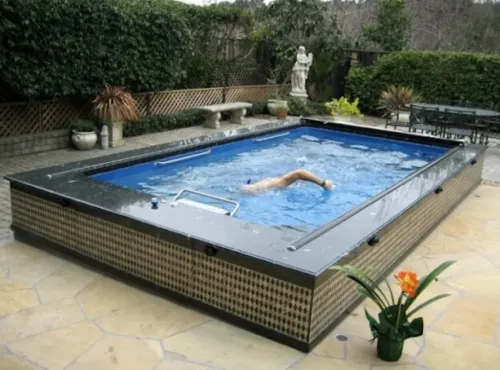
The decisive change is the treatment duty. Pool recirculation needs steady turbidity control while water passes repeatedly through the filter; industrial pretreatment needs a defined role before another process, not merely clear-looking water.
| Duty | Selection priority | What goes wrong with a mismatch |
|---|---|---|
| Swimming-pool recirculation | Continuous service flow, low turbidity, manageable pressure loss, and reliable backwashing | A filter that is too small raises pressure quickly; a filter treated as disinfection leaves microbiological control incomplete |
| Municipal or borewell clarification | Raw-water turbidity, suspended solids, iron or other site-specific loading, plus peak-flow handling | Sand will not remove dissolved TDS, hardness, nitrate, or fluoride; the wrong assumption overloads downstream treatment |
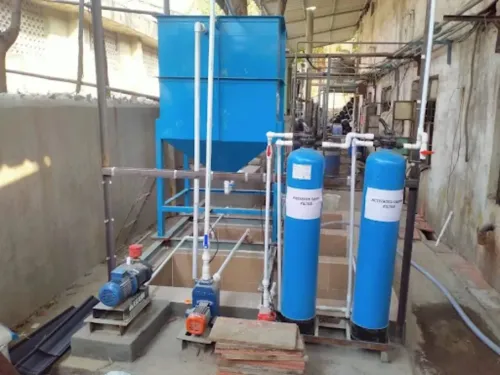
| Industrial pretreatment | Compatibility with activated carbon, softening, reverse osmosis, or disinfection and the required feed-water quality | An underspecified industrial pressure sand filter passes solids into the next stage and increases fouling or chemical demand |
For a pool, keep the filter in the recirculation loop and specify clean-start pressure, backwash trigger, backwash duration, and post-backwash water-quality checks. Maintain the required disinfectant residual and pH separately; sand filtration does not kill bacteria.
For industrial service, state the upstream water analysis and the downstream equipment before approving the vessel. Pressure gauges on both sides or a differential-pressure indicator show when rising solids loading, rather than a fixed calendar interval, requires backwashing. This distinction should drive pressure sand filter selection in Nagpur, not tank diameter or price alone.
Compare Nagpur suppliers by guarantees, installation and serviceability
Before signing with a sand filter supplier in Nagpur, require a written duty sheet tied to your water analysis and site layout. A vessel diameter alone does not guarantee usable flow; an underspecified backwash system can leave the bed dirty and increase pressure loss.
Request these details in the quotation:
- Guaranteed clean-water flow in m³/h, maximum operating pressure, design temperature, and pressure-test standard
- Vessel material, internal lining or corrosion-protection system, nozzle arrangement, and valve type
- Media type, effective size, grading or uniformity coefficient, bed depth, support gravel, and quantity by mass or volume
- Initial and terminal pressure loss, backwash flow, backwash duration, rinse sequence, and required drain capacity
- Inlet, outlet, drain and backwash pipe sizes, electrical or pneumatic requirements, and installation clearances
- Commissioning procedure, operator training, warranty exclusions, recommended spares, and response time for service calls
Compare written commitments rather than brochures:
| Supplier response | What to verify | Risk if absent |
|---|---|---|
| Performance guarantee | Flow, outlet turbidity, pressure-loss limits, and acceptance test | The filter may pass water but fail your quality target |
| Installation scope | Foundation, piping, valves, drainage, wiring, media loading, and commissioning | Site costs and startup failures shift to you |
| Serviceability | Local technician, spare valves and nozzles, media replacement method, and call-out terms | A small fault can stop treatment for days |
Ask the supplier to calculate the pressure sand filter size in Nagpur from your design flow and selected filtration rate, then show the calculation. Venkatesh Hydro Technologies should also be asked to state these same figures when its proposal includes supply and installation, not merely quote a standard vessel.
Related product
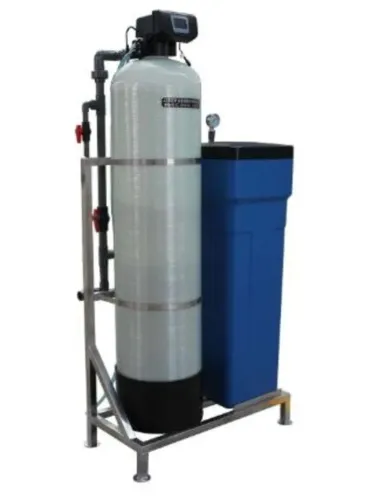
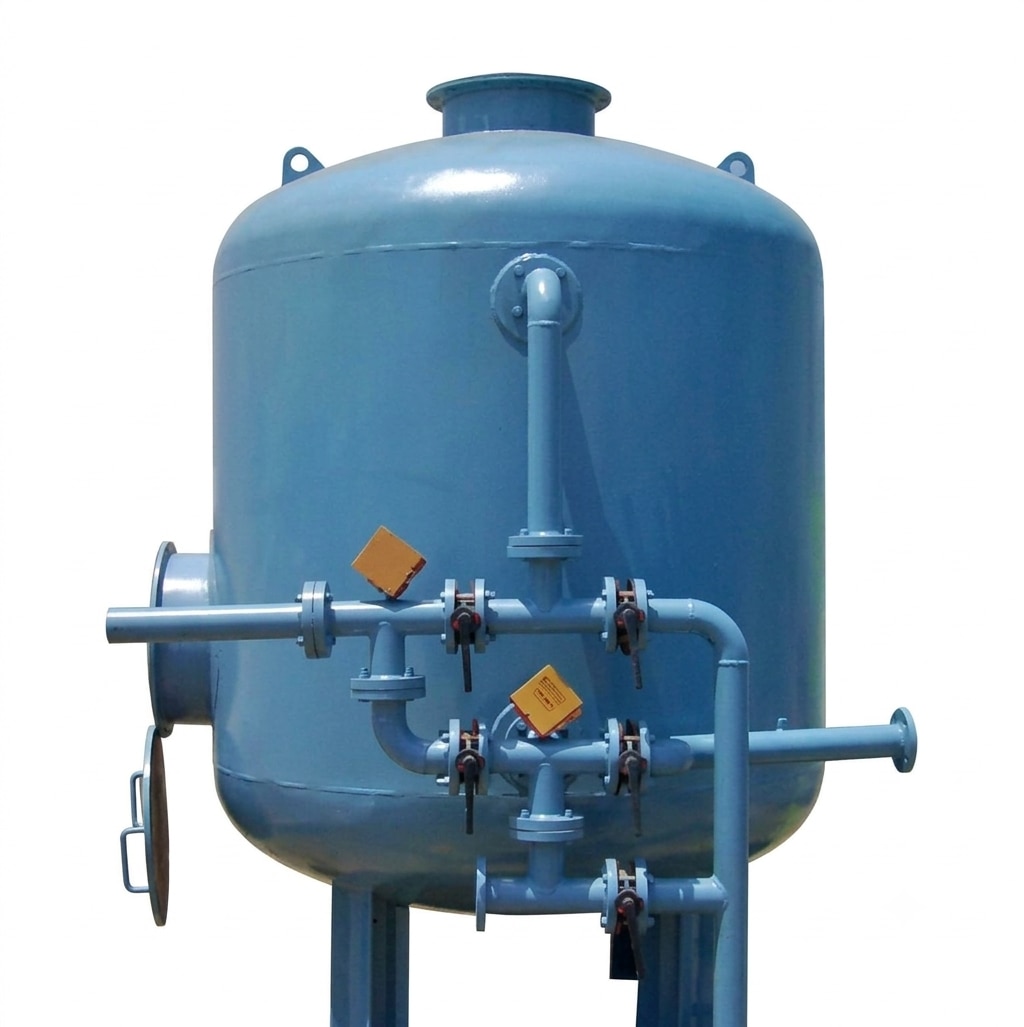
 | Sand Filters Usage/Application water purification Color Blue Vessel Diameter 200-400 mm Vessel Height 500-800 mm Bursting Pressure 10 KG Venkatesh is an company... View product → |
Frequently asked questions
What should you assess before choosing a pressure sand filter in Nagpur?
Identify the source water, suspended solids, required treated-water quality, operating flow and treatment duty. Pool recirculation, borewell water, municipal water and industrial pretreatment require different selection criteria.
How do you calculate pressure sand filter capacity?
Divide the required flow by the selected filtration rate. Use consistent units, such as cubic metres per hour divided by square metres per hour, to determine the required filter area.
Should vessel size, media depth and backwash flow be selected together?
No. Select the filtration area, vessel dimensions, media-bed depth and backwash arrangement separately, then confirm that the vessel and pump can operate together.
What should you compare when choosing a sand filter supplier in Nagpur?
Compare written performance guarantees, vessel and media specifications, installation scope, commissioning tests, backwash design, documentation, spare parts access and response time for service.
Keywords