Boiler makeup water must be designed from the boiler manufacturer’s limits, source-water chemistry and required operating hours—not from TDS alone. By following the survey, pretreatment, installation, commissioning and handover sequence, you can define the correct RO capacity, protect membranes and verify that the treated water is suitable for the next boiler-treatment stage.
Key takeaways
- Test seasonal source-water chemistry, not TDS alone.
- Size RO flow from boiler makeup demand and operating hours.
- Match pretreatment to hardness, iron, silica, chlorine and suspended solids.
- Record permeate quality, reject disposal and commissioning results before acceptance.
1. Test Nagpur source water and define the boiler design basis
Do not select an RO skid from TDS alone. Before industrial RO plant installation for boilers in Nagpur, establish source-water chemistry, seasonal variation, boiler limits, makeup demand and reject-water disposal; each changes pretreatment, membrane recovery or downstream polishing.
1. Collect representative borewell, municipal or recycled-condensate samples during dry and monsoon conditions. Test pH, conductivity/TDS, temperature, turbidity, SDI, hardness, calcium, magnesium, alkalinity, chloride, sulphate, silica, iron, manganese, free chlorine, oil, suspended solids and microbiological contamination.
2. Obtain the boiler manufacturer’s feedwater and makeup-water limits, operating pressure, blowdown practice, steam-use pattern and expected condensate-return percentage. This design basis establishes the required permeate flow and whether a deaerator, oxygen scavenger, pH correction, mixed-bed demineraliser or EDI follows the RO.
3. Calculate recovery from concentrate chemistry, not a fixed percentage. Check calcium carbonate, calcium sulphate and silica scaling risk against feed temperature, antiscalant performance and membrane configuration, then specify reject flow and membrane-cleaning intervals that commissioning can verify.
4. Define reject handling before equipment delivery. Route the concentrate to an approved sewer, evaporation system, reuse arrangement or collection tank according to site consent conditions, sewer capacity and Maharashtra Pollution Control Board requirements; never connect it casually to a storm-water drain.
For a boiler water RO plant in Nagpur, record the sampling results, design flows, water-quality guarantees and rejection route in the purchase specification. RO permeate is not automatically final boiler feedwater.
2. Calculate capacity and specify pretreatment before the RO skid
Size the RO permeate flow from the boiler’s maximum makeup demand, not from its average water use. Add losses from blowdown, leaks and startup, then divide by planned daily operating hours; include standby capacity if production cannot stop for membrane cleaning.
Set recovery only after calculating concentrate-side calcium carbonate, calcium sulphate and silica limits at the actual feed temperature.
For industrial RO plant installation for boilers in Nagpur, collect representative borewell and municipal samples during dry and monsoon conditions. Compare pH, conductivity, hardness, alkalinity, chloride, sulphate, silica, iron, manganese, turbidity, free chlorine, temperature and SDI before fixing equipment.
| Source condition | Main pretreatment risk | Equipment decision |
|---|---|---|
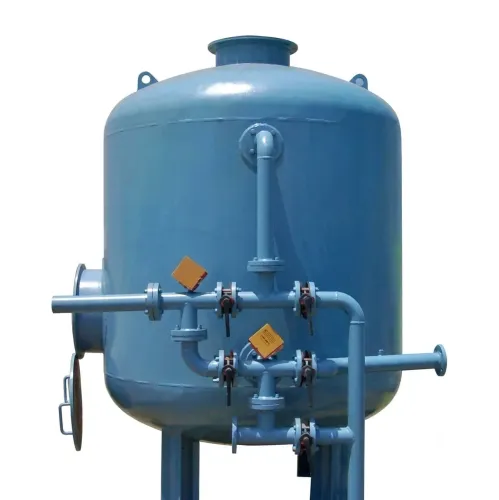
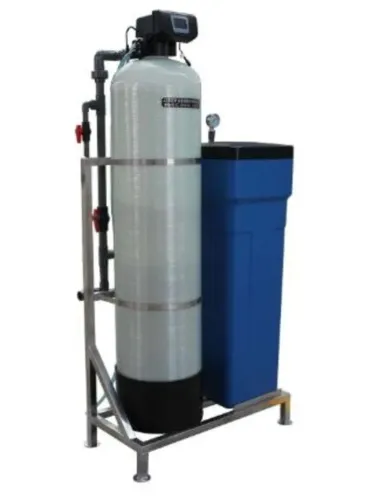
| Borewell | Hardness, iron, manganese, silica and seasonal turbidity | Multimedia filtration; oxidation and iron-removal media where required; softener or antiscalant dosing after a scaling calculation; cartridge filter before the RO |
| Municipal water | Free chlorine, turbidity and changing pressure | Activated-carbon dechlorination or sodium bisulphite dosing; multimedia and cartridge filtration; verify chlorine at the RO inlet |
| Mixed or variable supply | Rapid changes in hardness, chlorine and SDI | Separate source lines, online conductivity and chlorine checks, automatic changeover logic, and a conservative pretreatment design |
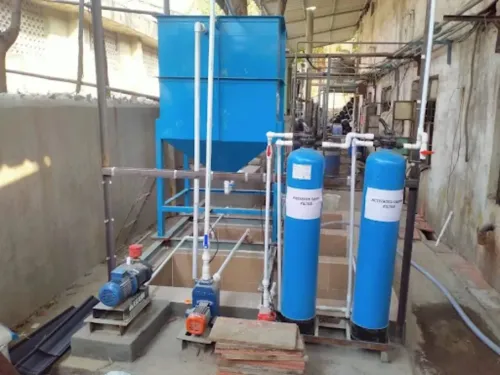
Specify raw-water and permeate tanks from the calculated flow, plus a level-controlled feed pump, low-pressure protection and cartridge filters sized for the peak rate. A boiler water ro plant in nagpur also needs sample points before pretreatment, after cartridges, at permeate and at reject; otherwise operators cannot prove which stage failed.
3. Prepare the plant room and install tanks, piping, instruments and controls
Before commissioning, complete the plant-room civil works, mechanical installation, electrical supply and control wiring; equipment that produces water but cannot be safely drained, serviced or isolated is not ready.
1. Prepare a level, vibration-free foundation with floor drainage, chemical-tank bunding, ventilation and protection from direct heat. Leave lifting clearance for cartridge housings and membrane vessels, and keep the skid away from boiler steam leaks and hot surfaces that can raise feed temperature and shorten membrane life.
2. Install correctly sized raw-water and permeate tanks, a level-controlled feed pump, and isolation valves. Fit low-feed-pressure and high-pressure-pump protection, pressure gauges before and after pretreatment and cartridge filtration, and sample points on feed, pretreated water, permeate and reject lines.
3. Connect membrane pressure vessels in the specified flow direction. Install permeate and reject flow meters, non-return or isolation arrangements, and a dedicated flushing route to the drain or reject-collection system. Prevent flush water from backflowing into the permeate tank; remove dead legs and permanently stagnant membrane-feed sections.
4. Define reject disposal before delivery. Route concentrated reject according to the site consent conditions, sewer capacity, evaporation or reuse design and Maharashtra Pollution Control Board requirements—not to a storm-water drain because the feedwater was potable.
5. Provide an earthed electrical panel, correctly rated isolator, motor protection, overloads, emergency stop, level switches, pressure interlocks and conductivity-based alarms. Industrial reverse osmosis installation in nagpur also requires labelled cables, piping and valves so operators can isolate each stream without guesswork.
4. Commission the RO plant and confirm boiler-feedwater quality
Start commissioning only after pretreatment water is clear, chlorine-free and within pressure limits. Flush through the dedicated route to drain or reject collection, and isolate the permeate tank so flush water cannot backflow into it.
1. Start the raw-water and pretreatment pumps. Verify pressure gauges, cartridge-filter differential pressure, low-feed-pressure trip and high-pressure-pump interlock.
2. Open the specified membrane flow direction, check for leaks and run the high-pressure pump at the approved feed temperature. Gradually set design pressure, then record permeate and reject flow, conductivity, temperature, recovery and reject conductivity.
3. Divert initial permeate to drain until conductivity stabilises. Collect labelled feed, pretreated-water, permeate and reject samples for laboratory testing.
Confirm these permeate results against the boiler manufacturer’s makeup-water limits:
- Conductivity or TDS
- Total hardness
- Silica
- Chloride and sulphate
- Alkalinity and pH
- Microbiological contamination
Accept the plant only after it passes an agreed capacity-and-quality test at a stated feed temperature. Do not approve a fixed recovery without checking concentrate calcium carbonate, calcium sulphate and silica risk. A boiler water RO plant in Nagpur may still need deaeration, oxygen scavenging, pH control, internal treatment or a mixed-bed/EDI polisher.
RO permeate is not automatically final boiler feedwater. The commissioning record must contain calibration certificates, operating limits, alarms, CIP instructions and signed laboratory results. This is how an industrial reverse osmosis installation in Nagpur proves usable water rather than merely producing water.
5. Complete reject disposal, documentation and contractor acceptance
Accept the contractor only after reject disposal, operating records and a witnessed performance test are complete. Water production alone does not prove that the boiler-water RO plant is correctly installed.
1. Confirm that reject piping matches the site’s Maharashtra Pollution Control Board consent, sewer capacity, evaporation system or approved reuse plan. Reject is concentrated waste; never allow a casual connection to a storm-water drain because the source water was potable.
2. Inspect the flushing route to drain or reject collection. Verify that non-return valves or isolation valves prevent flush water entering the permeate tank, and that permeate, reject and chemical lines have no uncontrolled dead legs or permanently stagnant membrane-feed sections.
3. Check the handover file for the approved P&ID, membrane and pressure-vessel datasheets, pump curves, electrical drawings, pretreatment settings, chemical SDS documents, calibration certificates, CIP instructions, operating limits, spare-parts list and preventive-maintenance schedule. A contractor such as Venkatesh Hydro Technologies should be able to explain each document against the installed equipment.
4. Witness a capacity and permeate-quality test at the agreed feed temperature. Record feed conductivity, permeate conductivity, flow, reject flow, pressure and recovery; compare the results with the design values and the specified boiler-makeup requirement.
5. Inspect the raw-water and permeate tanks, level-controlled feed pump, pressure protections, membrane flow direction, pressure gauges, flow meters and sample points. Record the agreed recovery and cleaning interval after checking concentrate chemistry, not by assuming a fixed 75 percent recovery.
A properly documented industrial RO plant installer in Nagpur and ro plant installation contractor in Nagpur will correct failed readings before acceptance, not explain them away.
Related products
 | Water Purifier Industrial Ro Plant Installation Service Industrial Ro Plant Installation Service View product → |
 | Water Purifier And Treatment Plant Water Source Type Borewell Water Usage/Application Filter Treatment Technique RO Automation Grade Fully Automatic Treatment Stages Secondary... View product → |
Frequently asked questions
What source-water tests are needed before installing a boiler-water RO plant in Nagpur?
Test TDS, conductivity, pH, hardness, alkalinity, chloride, sulphate, silica, iron, manganese, turbidity, suspended solids, free chlorine and microbiological quality. Test during different seasons when source-water chemistry changes.
How do you size an industrial RO plant for boiler makeup water?
Use the boiler’s makeup demand, blowdown rate, operating hours, peak demand and required storage volume. Include RO recovery, pretreatment backwash water, cleaning frequency and reject flow in the design basis.
What pretreatment is needed before an industrial RO skid?
Specify pretreatment from the water analysis. Common equipment includes a raw-water strainer, multimedia filter, activated-carbon filter or dechlorination system, softener or antiscalant dosing, cartridge filters and chemical dosing where required.
What should be checked during RO plant commissioning?
Verify feed pressure, permeate flow, recovery, conductivity, pH, chemical dosing, interlocks, alarms and tank levels. Compare permeate quality with the boiler-feedwater design limits before connecting the plant to service.
What documents should an RO installation contractor provide at handover?
Request approved drawings, equipment datasheets, membrane and vessel details, piping and instrument diagrams, test reports, operating instructions, maintenance schedules, chemical records, calibration certificates and signed commissioning results.
Keywords