A hotel’s room count cannot determine softener size by itself: the design must account for softened-water volume, hardness loading, peak flow and the time between regenerations. By the end, you will be able to turn your hotel’s water-use data and Nagpur source-water test into a defensible resin volume, vessel flow rating and equipment specification.
Key takeaways
- Count softened-water users, not the hotel’s total meter reading.
- Calculate resin volume from daily demand and tested hardness.
- Size the softener for peak flow and required service pressure.
- Specify pretreatment, regeneration controls and commissioning tests.
Start with the hotel departments that actually need softened water
Estimate softened-water demand from departments that consume treated water, not from the hotel’s total meter reading. Include each stream that feeds a boiler, hot-water generator, heat exchanger, laundry machine, kitchen hot-water line, guest-room shower, or staff shower.
| Stream | Include in softened-water estimate? | Reason |
|---|---|---|
| Hot-water generators and boilers | Yes | Hardness forms scale on heating surfaces and raises fuel and maintenance costs. |
| Laundry wash water | Yes | Hard water reduces detergent performance and leaves deposits on machines and fabric. |
| Kitchen hot-water lines | Yes | Scale can restrict heaters, spray arms, dishwashers, and storage tanks. |
| Guest-room and staff hot-water circuits | Yes | Include rooms served by the softened hot-water system, not rooms supplied directly with raw water. |
| Toilet flushing | Usually no | Flushing normally does not need softened water. |
| Irrigation | No | Landscape water has a different treatment objective. |
| Cooling-tower makeup | Conditional | Include it only when the tower’s water-treatment design calls for softening. |
| Swimming-pool makeup and circulation | Conditional | Pool treatment normally uses filtration, disinfection, and chemical control rather than automatic softening. |
Record the litres used by each included department through sub-meters, equipment schedules, or operating logs. The 180 L per bed per day planning benchmark can overstate softened demand: a 100-bed hotel would equal 18 m³/day only if every litre required the softener. Use that distinction when selecting a water softener size for hotel in Nagpur.
Convert daily demand and hardness into resin volume
A 100-bed hotel using the preliminary benchmark of 180 litres per bed per day would treat 18 m³ daily. At 500 mg/L hardness as CaCO₃, its hardness load is 18 × 500 ÷ 1,000 = 9 kg of CaCO₃ per day.
Calculate the required hotel water softener capacity in four steps:
- Add only the measured daily volume of softened-water streams and convert litres to cubic metres.
- Multiply daily volume by raw-water hardness in mg/L as CaCO₃, then divide by 1,000 to obtain kilograms per day.
- Multiply that daily hardness load by the planned days between regenerations.
- Add a reserve for hardness leakage, demand variation and incomplete regeneration, then divide by the resin’s usable operating capacity in kg per litre.
For the example, a three-day run requires 9 × 3 = 27 kg of usable capacity. With a 20% reserve, specify 32.4 kg. If the selected salt dose delivers 1.2 kg of usable hardness removal per litre of resin, the calculation is 32.4 ÷ 1.2 = 27 litres of resin.
Use the manufacturer’s usable capacity at the stated salt dose, not the resin’s total exchange rating. Reduced salt, high flow, restricted leakage and poor regeneration lower the working figure. Daily capacity also does not establish vessel diameter or peak service flow; size those separately.
Size for peak flow, not only daily volume
A vessel with enough resin for a hotel’s daily hardness load can still fail at 7 a.m. if its diameter cannot pass simultaneous showers, kitchen demand, laundry and hot-water-generator flow. Size a commercial water softener for hotels against peak flow, then confirm resin volume and regeneration capacity.
| Specification | What it measures | What goes wrong if undersized |
|---|---|---|
| Resin volume (L) | The quantity of ion-exchange resin installed | The unit regenerates too often or cannot hold the required hardness load |
| Continuous service flow (m³/h) | Flow the vessel can sustain during normal operation | Pressure drop rises and hardness leakage begins |
| Peak flow (m³/h) | Simultaneous short-duration demand | Guest showers and other outlets lose pressure, even when daily capacity is adequate |
| Usable regeneration capacity (kg as CaCO₃) | Hardness removed between regenerations at the selected salt dose | The cycle ends early; do not substitute the resin maker’s total exchange capacity |
Calculate daily hardness load separately from peak flow. State normal flow, peak flow, minimum inlet pressure and allowable pressure drop in the specification; an “X LPH” label without resin volume and hardness capacity is not enough.
Require the supplier to state salt dose, regeneration frequency and maximum outlet hardness. Test the installed commercial water softener for hotels using Nagpur raw water, recording flow, pressure drop, outlet hardness and treated volume before regeneration. Include the sampling point downstream of any blending or bypass valve, because a misadjusted bypass can return untreated water.
Use Nagpur’s tested source water and include pretreatment
A current raw-water report, not a citywide hardness assumption, controls water softener selection in Nagpur. Collect separate samples from municipal supply, borewell and tanker water; these sources can produce materially different hardness and fouling loads.
| Result or site condition | Design effect | Required response |
|---|---|---|
| Total hardness, calcium and magnesium | Sets resin capacity, regeneration interval and salt demand | Size against the highest representative source result |
| Iron, manganese, turbidity and microbiological quality | Fouls resin, blocks valves or creates a hygiene risk | Add filtration, iron or manganese removal, disinfection, or exclude that stream |
| pH, alkalinity, TDS, conductivity, chloride and sulphate | Exposes corrosion, scaling and dissolved-solids problems a softener cannot solve | Consider antiscalant, corrosion control, filtration or reverse osmosis |
| Variable source or tanker blending | Makes a single hardness value unreliable | Use source-specific operation or size for the worst confirmed blend |
| Low pressure, limited drain, salt-room space or restricted regeneration hours | Limits vessel size, backwash rate and regeneration timing | Verify pump pressure, floor drainage, brine storage and sewer capacity |
Test total hardness as CaCO₃, calcium, magnesium, pH, alkalinity, TDS or conductivity, iron, manganese, turbidity, chloride, sulphate and microbiological quality before fixing resin volume.
A high-iron borewell can require pretreatment before laundry or boiler water enters the softener; high TDS can justify reverse osmosis for kitchen, boiler or selected hot-water users rather than softening every hotel outlet. Do not automatically soften toilet flushing, irrigation, cooling-tower makeup or pool circulation.
Regeneration discharges saline water containing concentrated hardness and iron. Confirm the hotel’s drain, sewer and disposal route before approval.
Specify the operating system and verify it at commissioning
Specify a complete operating schedule and acceptance test, not merely an “X LPH” label; that label cannot establish hotel water softener capacity or prove a commercial water softener for hotels will meet its run length.
- State resin volume (L), usable hardness-removal capacity between regenerations (kg as CaCO3), continuous service flow, peak flow, inlet and outlet pressure, regeneration frequency and trigger, salt dose, treated volume, reserve capacity, and maximum outlet hardness with its sampling point.
- Specify duplex alternating operation when softened-water supply cannot stop. One vessel serves while the other regenerates or remains on standby, with controls that prevent simultaneous regeneration. A single larger vessel can cost less, but requires storage or a permitted outage.
- Include salt storage, brine preparation, rinse-water volume, regeneration duration, and a schedule that does not conflict with guest, kitchen, or laundry demand.
- Provide drain capacity, floor drainage, and an approved discharge route. Regeneration water is saline and can contain concentrated hardness and iron; confirm sewer, effluent, and local disposal requirements.
- At commissioning, use the hotel’s actual Nagpur raw water. Record inlet hardness, outlet hardness, flow, pressure drop, regeneration trigger, salt dose, and treated litres before regeneration; accept the unit only against stated limits, not its rated flow or an immediate post-installation sample.
If Venkatesh Hydro Technologies installs the unit, require these readings, calibration details, bypass position, and regeneration log in the handover file. Test downstream of blending or bypass valves, where incorrect adjustment can reintroduce untreated water.
Related product
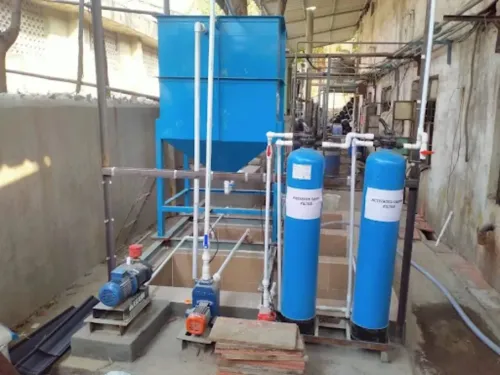
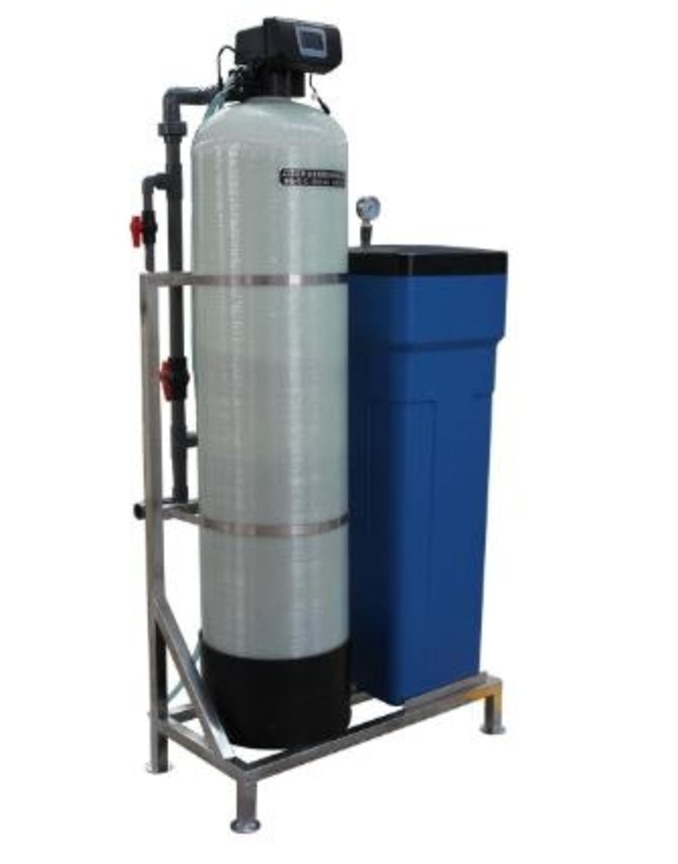
 | Water Softeners A water softener is a specialized system designed to remove hardness-causing minerals, primarily calcium and magnesium, from your water supply. View product → |
Frequently asked questions
Which hotel departments need softened water?
Include water feeding boilers, hot-water generators, heat exchangers, laundry machines, kitchen hot-water lines, guest-room showers and staff showers.
How do you calculate hotel water softener capacity?
Multiply daily softened-water demand by tested hardness, then convert the hardness load into the required resin volume using the resin manufacturer’s working capacity.
Why must a hotel softener be sized for peak flow?
The softener must supply the highest simultaneous demand without excessive pressure drop or untreated water bypassing the resin bed.
What source-water information is needed in Nagpur?
Use a recent laboratory test showing total hardness, iron, manganese, pH, turbidity, total dissolved solids and chloride for the actual source.
What should be checked during commissioning?
Verify inlet and outlet hardness, service flow, pressure drop, regeneration settings, brine draw, rinse sequence, bypass operation and treated-water availability.
Keywords