A pollution-control notice, overflowing collection tank, failed discharge test, or production restart deadline demands more than a fast equipment quote. You will be able to separate immediate containment from permanent ETP work, prepare the data needed for sound design, compare plant formats, and set acceptance conditions that hold under real production.
Key takeaways
- Stop unauthorised discharge and preserve MPCB notices, test reports, and operating records.
- Collect flow, production, pollutant, shift, and discharge data before sizing an ETP.
- Choose modular equipment for speed; choose civil construction when capacity and site conditions demand it.
- Commission under production load and document treated-water results before routine discharge.
What to do in the first 24 hours of an ETP emergency
Stop any unauthorised discharge immediately after an MPCB notice, Consent to Operate issue, overflow, non-compliant result, or restart deadline. An urgent effluent treatment plant installation in Nagpur does not authorise discharge while approvals are pending.
1. Isolate the source: close bypasses and outlet valves, stop the contributing process, and separate incompatible streams. Check tanks, sumps, pipelines, pumps, bunds, and drains for leaks or overflow.
2. Measure and record every tank level, available equalisation volume, inflow rate, sludge quantity, and estimated time to overflow. Photograph valves, alarms, instruments, labels, and visible contamination.
3. Preserve production logs, flow-meter readings, chemical dosing records, maintenance reports, laboratory results, notice documents, and CCTV footage. Take identified influent, tank, and discharge samples using labelled containers, recording date, time, location, and sampler.
4. Contact the Maharashtra Pollution Control Board where the notice, consent condition, spill, or proposed temporary arrangement requires reporting. Ask for written direction and keep an incident timeline.
Decide whether the failure is permanent or containment-only. Equalisation storage, tankers, sludge removal, batch treatment, and authorised off-site disposal can protect the site while engineering proceeds. Document each volume, waste classification, transporter, manifest or transfer record, and authorised destination.
Do not route untreated effluent silently to a storm drain, sewer, open land, or unapproved tank. Consent to Establish is required before installing or modifying pollution-control infrastructure; Consent to Operate is required before operating it. A temporary fix protects containment, not compliance.
What information must be collected before anyone sizes the plant
Before an effluent treatment plant contractor in Nagpur sizes the plant, give them measured flow, production conditions, laboratory results and the authorised discharge route.
- Daily flow in kilolitres per day, hourly peak flow, batch volumes, shift pattern, operating hours and future expansion
- Production-wise discharge points, drainage elevations, tank levels and the timing of intermittent releases
- pH, temperature, COD, BOD, TSS, oil and grease, conductivity or TDS, ammonia and other nutrients, colour, and heavy metals
- Chemicals used in production, cleaning, pickling, plating, biocides, solvents and pharmaceutical processes
One grab sample can miss a batch discharge, solvent shock or high-salinity release. The result is an undersized equalisation tank or a biological system that fails when production changes.
Sample each significant process stream separately. Collect time-based or flow-proportional composite samples across representative shifts and batches, then record the date, time, location, preservation method and batch conditions on every container. Use a competent laboratory and retain the reports, chain of custody and sampling plan.
Record the authorised outlet and its written conditions in the design file. Discharge limits differ by route:
| Route | Conditions to confirm |
|---|---|
| Inland surface water | Outlet limits and receiving-water requirements |
| Public sewer | Sewer acceptance limits, pretreatment conditions and flow restrictions |
| Irrigation land | Quality limits and permitted application conditions |
| Marine or coastal discharge | Coastal outlet limits, salinity and monitoring conditions |
The factory’s Maharashtra Pollution Control Board consent can impose limits stricter than a standard equipment specification.
How to match treatment stages to the effluent and pollutant load
Flow in kilolitres per day cannot size an ETP: two factories with the same flow may carry very different BOD, COD, metals, solvents, or salinity loads. Match each stage to measured pollutants and kilograms per day, then check toxic or inhibitory chemistry before selecting biological treatment.
Ask an industrial etp plant supplier in nagpur for this load basis.
Begin with screens, grit removal, fibre capture, and large-solids removal. Equalisation with mixing then smooths peak flow, pH, temperature, salinity, solvents, biocides, and batch shocks; without it, one discharge can inhibit the biological stage.
| Industry | Treatment train | Main design check |
|---|---|---|
| Food processing | Screening, equalisation, biological treatment, clarification, filtration | BOD/COD load, oxygen transfer, aeration capacity, and sludge-retention basis |
| Metal finishing or electroplating | Equalisation, oil separation, pH adjustment, coagulation, flocculation, clarification, chemical precipitation | Dissolved metals and precipitate-sludge handling |
| Pharmaceutical, engineering, or textile dyeing | Segregation, equalisation, biological treatment, adsorption, oxidation, or polishing | Toxicity, inhibitory chemicals, colour, refractory COD, and variable batches |
Primary treatment removes oil and grease by separation, while coagulation, flocculation, clarification, or precipitation targets suspended and dissolved contaminants. Food effluent may need strong biological treatment; pharmaceutical and engineering streams need inhibition checks.
Tertiary filtration, activated carbon, advanced oxidation, membranes, or disinfection belongs in the train only when the consented outlet or reuse target demands it. Textile colour can require oxidation or adsorption. RO does not destroy dissolved pollutants; its reject needs further treatment, authorised disposal, or a ZLD plan.
High TDS, refractory COD, solvents, or hazardous metals can make conventional biology insufficient.
Should you choose a modular ETP or a civil-built plant for urgent work
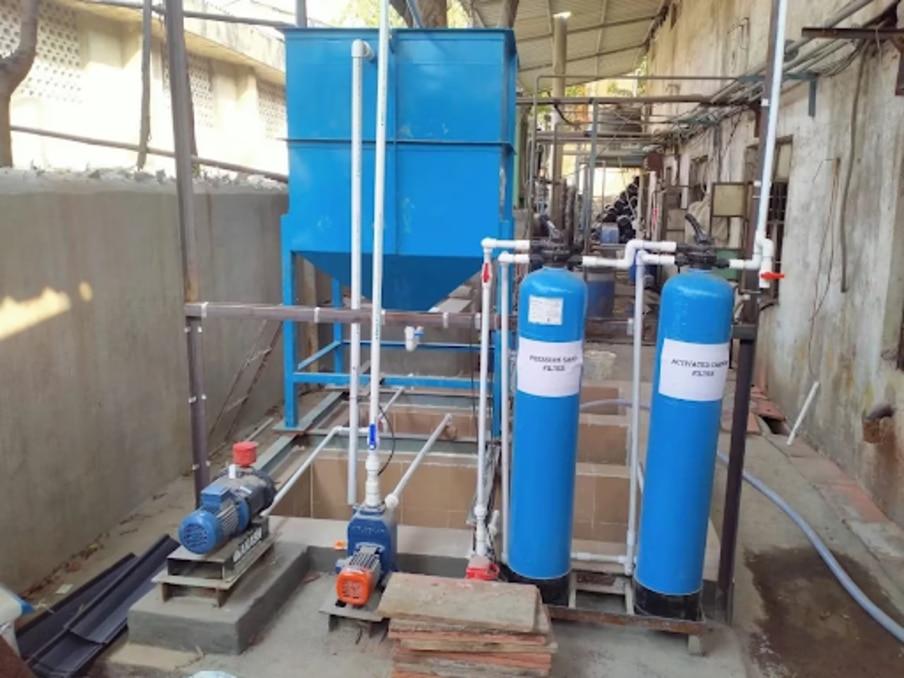
A modular or containerised ETP can shorten civil construction, but it is not a plug-and-play solution. Choose it for a temporary response or staged expansion only after verifying the site and the actual effluent load.
| Option | Strength | Main constraint |
|---|---|---|
| Modular ETP | Faster fabrication, smaller initial civil package, relocation or expansion potential | Needs foundations, crane or transport access, hydraulic elevations, piping, power, chemical storage and sludge handling |
| Civil-built ETP | Larger equalisation volume and simpler future expansion | Requires excavation, curing, waterproofing and closer construction coordination |
Compare both options on verified peak flow and pollutant load, not daily flow alone. Price the full operating picture:
- Equalisation volume and expansion space
- Electrical demand, chemical consumption and standby equipment
- Membrane or media replacement, sludge handling and operator skill
- Tanker, maintenance and access requirements
- Treated-water discharge point, drainage connection and total operating cost
Check corrosion-compatible materials, hazardous-area requirements, foundations, interconnecting piping and cable routes before dispatch. A power supply, chemical store, emergency holding volume and authorised discharge route remain necessary; installation cannot replace Consent to Establish or Consent to Operate.
An ETP installation company in Nagpur should issue a programme separating design, approvals, civil works, equipment fabrication, installation, cable termination, wet testing and production commissioning. Venkatesh Hydro Technologies can be compared with other providers when its proposal assigns each interface and states the assumptions behind capacity, delivery time, chemical use and operating cost.
Related product
 | STP/ETP An Effluent Treatment Plant (ETP) is a facility designed to treat industrial wastewater or effluent before it is released into the environment or... View product → |
How to commission the plant and prove it works during production
A water-only trial proves almost nothing about an ETP under production stress. Commission it across the factory’s real shifts, batches, and operating hours, then compare performance with written acceptance limits.
1. Record the test basis: influent flow in kilolitres per day and peak hourly flow, pollutant loads, operating hours, acid or alkali doses, outlet parameters required by the MPCB consent, sludge generation, connected electrical load, and the sampling method.
2. Run each safeguard under operating conditions. Verify equalisation-tank mixing, online pH control, interlocked acid or alkali dosing, duty and standby pumps and blowers, high-level alarms, emergency holding volume, power-failure response, and the absence of any unauthorised bypass.
3. Define compliance sampling before the trial starts. State the sampling point, container and preservation method, grab or flow-proportional composite method, sampling duration, and laboratory analyses required by the consent or applicable standard. Online pH, flow, and level readings control the plant; they do not prove discharge compliance.
4. Complete handover only after training operators in start-up, dosing calibration, shutdown, alarms, daily log sheets, preventive-maintenance schedules, spare-parts control, and sludge handling.
Sludge containing process contaminants or listed hazardous constituents may fall under the Hazardous and Other Wastes (Management and Transboundary Movement) Rules, 2016, requiring classification, authorised storage, records, and transfer to an authorised facility—not municipal disposal.
Sign acceptance only when results cover every real shift and the file contains approved drawings, manuals, test results, operating limits, and maintenance records.
Frequently asked questions
What should a factory do during the first 24 hours of an ETP emergency?
Stop unauthorised discharge, isolate overflow paths, secure samples and records, review the MPCB notice or compliance failure, and arrange temporary containment while a technical assessment begins.
What information is needed before sizing an effluent treatment plant?
Collect daily and peak flow, operating hours, production process, raw materials, cleaning cycles, pollutant concentrations, existing tanks and utilities, land constraints, sludge handling needs, and the intended discharge or reuse point.
How do you match ETP treatment stages to industrial effluent?
Use laboratory results and process knowledge to select stages such as screening, equalisation, pH correction, oil separation, coagulation-flocculation, biological treatment, filtration, or advanced treatment for specific pollutants.
Is a modular ETP better than a civil-built plant for urgent installation?
A modular ETP reduces civil work and installation time when standardised capacity fits the site. A civil-built plant suits larger flows, unusual wastewater, deeper tanks, or permanent expansion plans.
Keywords